




Until the 20th century and the introduction of cement plants, this area distinctly focused on cattle breeding and agriculture. The Jadro River – locally called „Rika“ – became the source of all life. Rich pastures and gardens grew on its banks, while water mills had been built since here since ancient times.
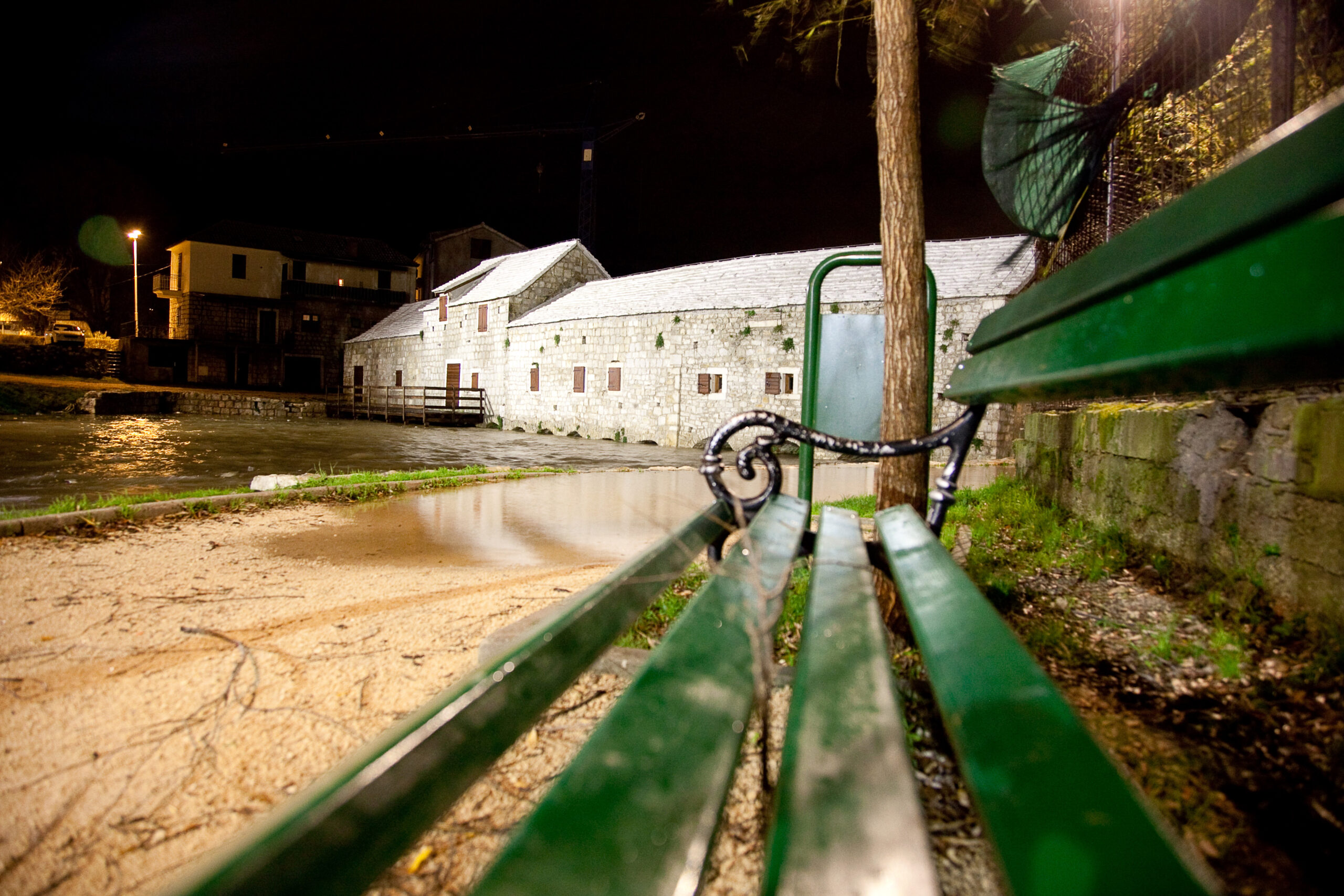
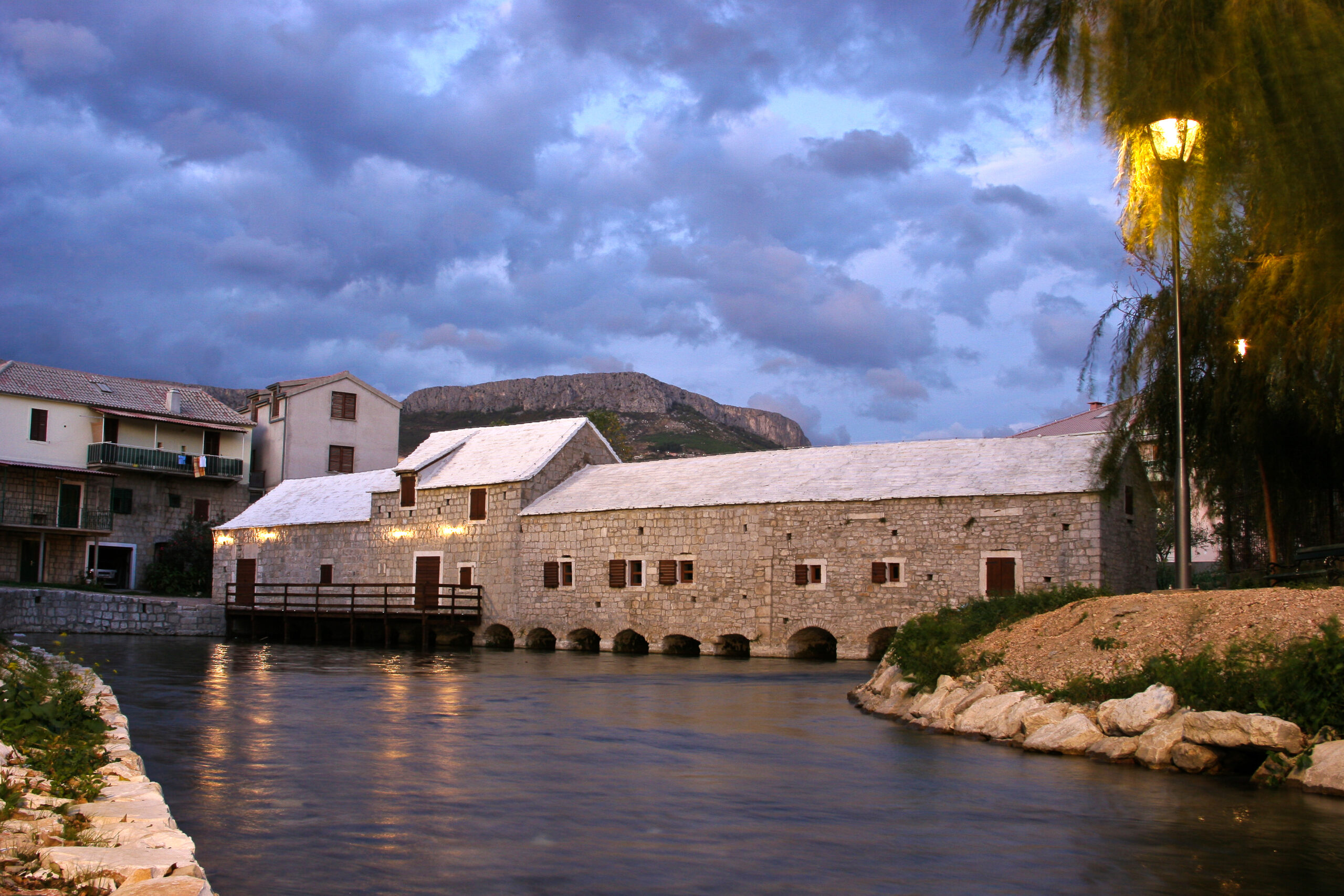
„Rika“ was the only river with abundant water throughout the year in the large area extending from Šibenik to Omiš and thus became the regional centre of the miller’s trade. Here, the grain was ground by the farmers from the inland area of Zagora, who would descend from the Klis Mountain in autumn with wagons. The islanders also grounded grain in the Solin mills. The Gašpina watermill is one of the only preserved mills on the Jadro River. It was built in the early 18th century and the first records of it date back to 1711. Its structure consists of four low buildings in a row with gable roofs covered with stone plates. Over the centuries, its structure has been modified and upgraded, which is evident from the subsequently created windows on the facade. The building faces a north-south orientation and the water was directed through the channels from the east, free-falling to the lower parts of the mill, i.e. to the wires attached to the axles. The doors and windows mainly face west. An ancient stone stele was placed above the main entrance.
The inside of the mill contains the static stone parts of the mill with stone water wheels. Based on the architecture and information gained from old literature sources, it appears that the oldest part of this complex is the southern one, while the middle one was rebuilt on higher ground after being destroyed by the river flooding in 1885. Mills remained a lucrative business for years, but the imminent demise of the industry was evident by the late 19th century. Nevertheless, Gašpina mill would continue to grind grain until the 1960s and a glass grinding shop was also located there in the 1930s. In terms of historical continuity and ethnographic value, this mill represents a cultural monument and has been entered into the Registry of Cultural Monuments of the Republic of Croatia as such.
FROM THE SOLIN POT – WHAT DID OUR ANCESTORS EAT?
It is a gastronomic event, the winner of the Simply the best 2014 award, a recognition for inventiveness in the development of tourist offer, which is held every year at Gašpina watermill, the winner of the blue flower of the HTZ for the best tourist product, and which aims to present a rich cultural and historical heritage. After a half-hour cultural and musical program, visitors can taste traditional food and enjoy the music performance of a local band in a beautiful setting in front of the Gašpina watermill.